

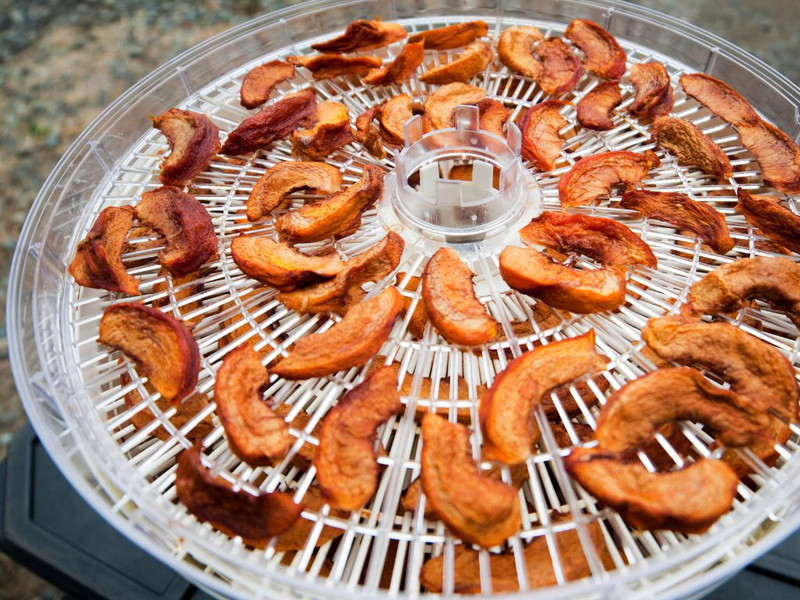
The Ultimate Guide to Dehydrating (Almost) Every Type of Food
Dehydration is one of the oldest and most effective methods for preserving food. Since ancient times, it has allowed extending the shelf life of fruits, vegetables, herbs, and proteins, without the need for additives or refrigeration.
This process involves removing the water content from food, which prevents the growth of molds, yeasts, and bacteria, and retains most of its nutrients. Additionally, dehydrated foods are light, compact, and easy to transport, making them an excellent option for daily healthy snacks.
Here’s a practical guide to learning how to dehydrate different types of food, from the most common methods to the precautions that ensure safe and nutritious preservation. It also complements our step-by-step guide to dehydrating fruits at home that we published on our blog.
Methods for dehydrating food at home
There are different ways to dehydrate food, and the choice of method depends on the type of food, climate, and available equipment. It's also a matter of taste! So, let's explore all the options:
1. Electric dehydrators
These are the most precise and efficient option. These devices allow for controlling temperature and air circulation, ensuring uniform drying. They are ideal for those planning to dehydrate large quantities of fruits, vegetables, or herbs.
2. Traditional or convection oven
If a dehydrator is not available, a home oven is a practical alternative. It is recommended to use low temperatures, between 60°C and 75°C, and keep the door slightly ajar to allow moisture to escape. Ovens with a convection function—meaning they incorporate a fan that circulates hot air uniformly throughout the interior—offer more homogeneous results due to the hot air circulation.
3. Sun or air drying
Sun drying is a traditional technique that requires a warm, dry, and well-ventilated environment, with temperatures above 30°C. It is ideal for fruits like peaches, tomatoes, or aromatic herbs. In humid climates, it is recommended to do it indoors with good ventilation to prevent mold growth.
Preparation, temperature, and drying times
Before dehydrating any food, it's important to prepare it correctly and control the temperature to preserve its properties. This is perhaps the most important step to always consider.
Food preparation
- Select fresh, ripe, and unbruised foods.
- Wash thoroughly and cut into uniform pieces or slices for even drying (fruits are usually cut 3 to 5 mm thick).
- Perform a pretreatment according to the type of food:
For fruits: submerge for 10 minutes in diluted lemon juice or a vitamin C solution to prevent oxidation and maintain color. For vegetables: blanch for 2 to 5 minutes in hot water (except onions, garlic, and herbs) to inactivate enzymes and speed up drying.
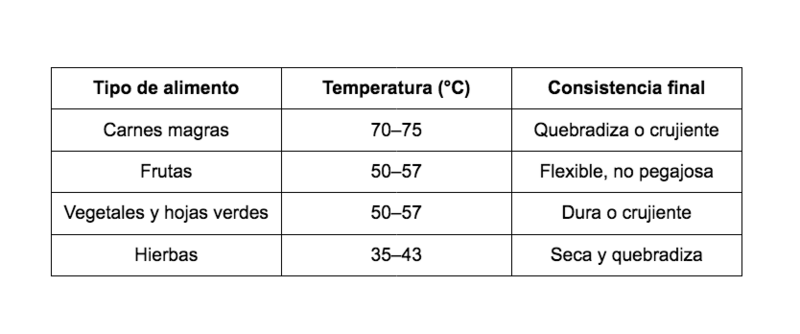
What are the recommended temperatures?
Each type of food requires a specific temperature range to achieve the right balance between safety, texture, and flavor. Here’s a table we created that includes (and summarizes) some of them. Note that the entire process can take between 6 and 12 hours, depending on the food’s water content, slice thickness, and the method used.
What foods you can (and cannot) dehydrate
Most foods can be dehydrated with good results, but some have limitations due to their high water or fat content. Here is a list of the ideal ones for dehydrating:
- Fruits: apples, mangoes, peaches, bananas, strawberries, grapes, pears, plums, and apricots.
- Vegetables: carrots, peppers, zucchini, beets, tomatoes, and spinach.
- Herbs and spices: oregano, basil, parsley, cilantro, and mint.
- Proteins: lean meats or defatted fish (for jerky).
Those you should not consider dehydrating:
- Fatty products like avocado, olives, or high-fat meats, as they can turn rancid.
- Liquids like milk or raw eggs, which require industrial drying processes.
- Fruits with high moisture content (melons or citrus), which are difficult to dry completely at home.
Considerations in this (almost) definitive guide!
It is important to consider that once dried, foods should be stored in airtight jars or bags, in a cool, dark place. The absence of moisture is key to preventing the proliferation of microorganisms.
To rehydrate them, simply soak them in lukewarm water for 30 minutes to two hours before adding them to a preparation. In soups or stews, they can be added directly to the hot liquid to regain their original texture.
Food dehydration is a versatile, safe, and sustainable technique that allows you to make the most of fresh produce and reduce waste. In addition to preserving nutrients, it offers a healthy alternative to ultra-processed snacks and contributes to a more natural diet.
At Bigu, we apply this same principle to create 100% natural dehydrated fruit and vegetable snacks, with no added sugar or preservatives, designed to enjoy nutrition in its purest form, anytime, anywhere.